We moved the house 100 feet before a single nail was driven.
Not because something went wrong. Nothing had been built yet. We moved it because the land said to. The result: a better view, an easier driveway, less excavation, and a lower cost. The clients got a better home than the one they planned, and they paid less to build it.
If you own mountain land, or you’re close to buying a piece of it, I want to slow you down on one decision. House placement on mountain land shapes everything that follows: what you see from every window, how you arrive, what the site work costs, how the home lives for the next 50 years. And most people never really make the decision. The house simply goes where the plans assume it goes.
Here’s how that 100 feet happened, and what it tells you about a phase of building almost nobody talks about.
How Do You Get House Placement on Mountain Land Right?
You read the terrain. Not from the plans, not from listing photos, not from the road. On the ground, with the brush out of the way.
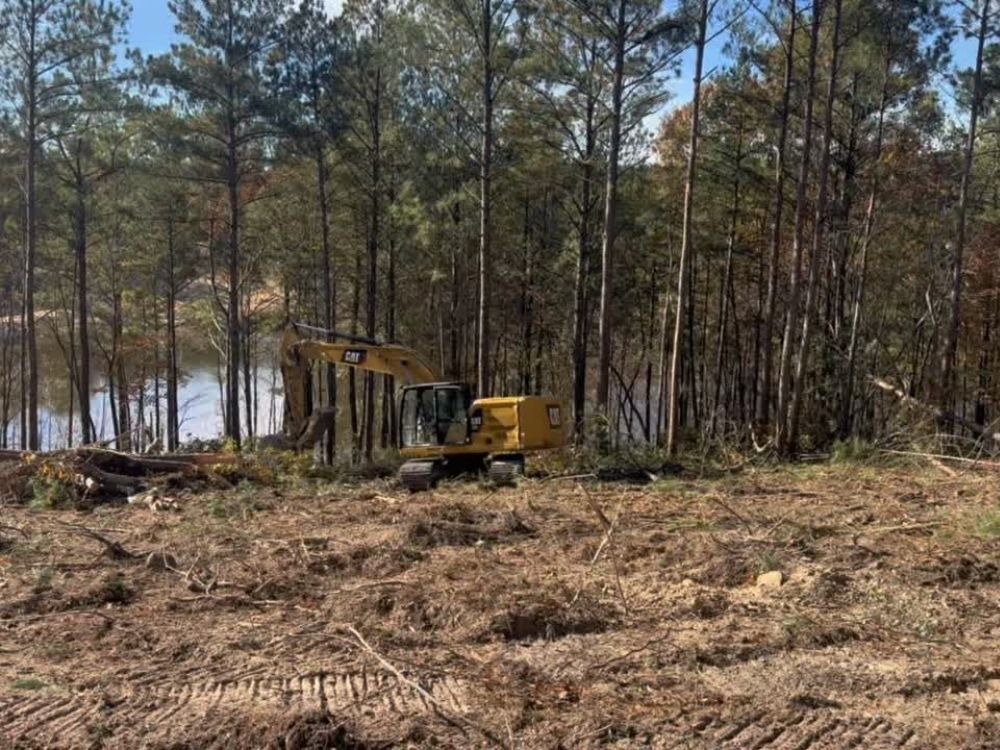
The clients on this build had already decided where their house would go. It was a reasonable spot. It was also a guess, because nobody could see the property under the growth. So before committing to a placement, I rough-cleared the lot. I trimmed out the underbrush until I could read the topography honestly: how the grade fell, where the views opened up, what a driveway would have to do to get you to the front door.
![[IMAGE: Jerry standing on a rough-cleared mountain lot, reading the slope and sightlines before any placement decision is made]](https://patterns.generatepress.com/wp-content/uploads/2024/10/placeholder800x.png)
What I found changed the whole project. Moving the house 100 feet gave them a dramatically better view. It eliminated a steep driveway approach. It took the retaining walls out of the plan, along with a serious amount of excavation. The garage rotated to work with the new position. Every one of those changes made the home better. The total effect on the budget was down, not up.
“We moved the house 100 feet before a single nail was driven.”
– Jerry Groves, RLG
Here’s what moving the house 100 feet changed:
- A dramatically better view from the main living spaces
- A steep driveway approach, gone
- Retaining walls, off the plan entirely
- A serious amount of excavation, avoided
- A lower build cost than the original placement
None of that was visible in the plans. All of it was sitting on the property, waiting for someone to walk the land with the right eyes before anything was committed. And the dollars attached to reads like this get big fast. I wrote about what that looks like on the buying side in the $700,000 mistake one buyer almost made buying mountain land in North Georgia.
The Part of the Building Process Nobody Shows You
Most people picture building a home in three steps. Find a builder. Get a price. Build the house.
That’s a fair picture. It’s the one the industry presents, and it’s how most builds actually run. If that’s your mental model, you haven’t misread anything.
But there’s a phase before that sequence ever starts, and it decides more about your outcome than construction does. Where the house sits. How it faces. What the arrival feels like. What the land will demand before a foundation can even go in. Those decisions get made before the first concrete truck shows up, either by someone who knows how to make them or by default.
Most buyers never see this phase, for a simple reason: most builders skip it. A builder pricing from plans has no reason to clear brush and read a slope. So the house lands where the drawing put it, and everyone moves on.
Placement is one of eight reads I run on any mountain property before a number exists. The complete method is laid out in my guide to evaluating mountain land before building. For now, stay with placement, because it carries the most expensive consequences.
What Gets Decided Before the Foundation Is Poured?
More than most people would guess. Three examples from real builds. Each one is a different class of decision, and every one of them was settled before the foundation existed.
Which way the home faces
One client mentioned that Christmas is the most important time of year for their family. It’s when everyone is together. So I took a compass to the property and worked out where the sun would sit during Christmas week at that latitude. The house is positioned so the sun sets through the best window in the home at the hour the family is most likely to be gathered. They never asked for that. They said the view was important, and that’s what the view was for. Orientation gets decided once, and the home performs on the day that matters most for as long as it stands.
How you arrive
An estate is experienced by everyone who arrives at it, not just the people who live in it. On our current build, the driveway is positioned so the home reveals itself in sequence as you come up the approach, instead of all at once from the road. That reveal was designed before the foundation was poured, for guests who haven’t been invited yet. Karen says it straight: “If you’re spending $3 million on something, you want people to be impressed when they see it.”
When you decide
Mid-framing on that same build, before any walls existed, I nailed temporary decking across the future main floor so the clients, visiting from out of town, could stand where their home would be. Actual height. Actual view. Standing up there, they made real decisions, including rotating the garage, which hadn’t worked as well after the house moved. At that point those changes cost almost nothing. The same changes six months later would be a number you’d feel. That’s the whole point of the pre-phase: decisions get made while they’re still cheap to make.
Run this read on your own land
Every decision above started the same way: with a read of the land. I’ve turned that read into a tool you can use yourself, on land you own or land you’re considering. The Land Read scores any mountain property on the eight factors I check before placement is ever discussed. Eight questions, about five minutes, no charge.
Take the Land Read: score your property in five minutes
Who Is Responsible for the Front Half of Your Build?
Here’s the frame that makes sense of all of this. The home is the back half of the engagement. The front half is everything that turns a piece of land into a legacy: where the house sits, how it faces, how you arrive, what the land demands and what it offers. Construction executes those decisions. It doesn’t make them.
Most builders don’t do the front half. Most clients don’t know it exists. That’s not a knock on anyone. It’s two different jobs wearing the same name. But it means the most important half of your build can go completely unmanaged, and nobody will tell you, because nobody believes they skipped anything.
So the question to sit with isn’t whether your land has a right placement. It almost certainly does. The question is who’s responsible for finding it. That’s really a question about how you pick your builder, and I’ve answered it from the other side of the table, in choosing a custom home builder in North Georgia: what I learned as the client who got burned.
At RLG, the front half isn’t a premium service or an upgrade. It’s where we start. It’s on our website in four words: Built Where It Belongs. We rough-clear before we commit to a placement. We read the land before we put anything on it. Your build is decided before the foundation, and we treat it that way.
If you take one thing from the 100-foot move, take this: the pre-phase starts with a read of the land, and you don’t need to wait for a builder to begin it. You can run the first read today, on property you already own or a piece you’re still deciding on. There’s no clock on it. The land isn’t going anywhere, and the read will be just as true next month as it is today.
See what your land is telling you
The Land Read walks you through the same eight factors I check on every mountain property before placement is ever discussed. Eight questions. About five minutes. You’ll come away knowing what your land offers, where it will fight you, and what to ask about next.